Table of Contents
Jump to the section you care about.

Positioning
This case is built for an OEM program, engaging at platform kickoff to deliver a production-ready, maintainable, and scalable tractor A/C system along with clear program deliverables.
This case focuses on
- Aligned with OEM platform kickoff: unified requirements, boundary conditions, and acceptance criteria early
- System-level robustness and failure prevention for vibration, dust, and high-ambient operation
- Packaging and service access driven: installation reach, maintenance paths, and anti-vibration routing
- Closed loop from requirements → prototypes → validation → production: issue tracking, standard fixes, and consistency
Engineering Value
For OEMs, value is not only cooling capacity—it is deliverability: a repeatable method connecting collaboration, validation closure, and production consistency.
Quantify extreme-duty requirements and risks during review to reduce late changes and rework
System matching + component engineering to stabilize comfort while controlling NVH/efficiency trade-offs
Traceable program deliverables: requirements, drawings, validation plan, issue closure, and change log
Production introduction ready: key processes, inspection criteria, and supply-chain consistency planned upfront
Background (Industry Pain Points)
In OEM new-platform and facelift programs, the A/C system is developed in parallel with cabin structure, ducting, and the electrical architecture. If targets, boundaries, and cost constraints are unclear at kickoff, iterations become costly.
Meanwhile, tractor duty differs significantly from passenger vehicles: low-speed high-load operation, airborne dust and straw/chaff/weed fibers, long-term vibration, and concentrated engine heat sources. Condensers and evaporators are more prone to fouling buildup and localized clogging, which can lead to heat-exchange degradation, fatigue issues, noise increase, and service difficulties. A disciplined requirements review → prototype iterations → validation closure → production introduction path helps mitigate these risks before SOP.
What we lock down at kickoff
- Platform boundaries: cabin space, duct routes, harness/line routing, and service access
- Duty & acceptance: ambient range, dust exposure, vibration spectra, and low-speed/idle heat rejection limits
- Prototype cadence: stage goals, validation plan, and issue-closure mechanism
- Production consistency: key part specs, inspection criteria, assembly process, and traceability
Cabin Packaging & Airflow Illustrations
Illustrations are for packaging, airflow direction, and serviceability reference. Final layouts depend on the OEM platform and program constraints.


Core Development Flow (Six-Step)
Start from duty definition and end with validation closure and production readiness—turn “works” into “consistently deliverable”.
Define Requirements & Duty
Architecture & Packaging
Thermal Matching & Simulation Support
Component Engineering
All-Condition Validation Loop
Production Introduction
Key Component Innovations
Design risk out early, focusing on contamination resistance, durability, thermal matching, and control strategy.
Split Architecture & Packaging Strategy
Partition key units by heat source and service path to improve installation adaptability and reduce maintenance burden.
- Durability-focused routing for lines and harnesses
- Service-friendly access and replacement paths
Compression & Heat-Exchange Matching
Match compressor capability, condenser/evaporator heat exchange, and airflow organization to tractor low-speed conditions and thermal loads.
- Avoid single-point “oversizing” side effects
- Balance reliability, noise, and efficiency
Anti-Clog Heat-Exchange Cores (Condenser/Evaporator)
For agricultural contaminants such as dust, mud splashes, chaff, and weed fibers, optimize core structure and protection strategy to reduce clogging and cleaning-related performance loss.
- Treat clog-prone zones as primary design inputs and optimize structure/airflow early
- Balance heat rejection with contamination resistance to reduce fouling-induced degradation
- Design for field-cleaning methods and service access to minimize downtime
Dust Protection & Positive-Pressure Concept
Strengthen filtration and protection for dust and straw particles to reduce fouling and airflow degradation risks.
- Maintenance-friendly filtration strategy
- Target stable airflow and cabin air quality
Smart Control & Early Warning
Bring key states into control logic for more stable comfort and clearer service hints when abnormal conditions occur.
- Reduce fluctuation under harsh conditions
- Provide more interpretable service clues
Component Photos (Illustrative)
Images below show form factors and packaging references only. Actual configurations depend on the OEM platform and program requirements.


All-Condition Validation
Validation is a closed-loop system across the development cycle, ensuring stable performance in different scenarios.
Controlled Lab Validation
Use repeatable conditions to validate boundary behavior and form comparable references for iteration.
- Use standards as a baseline framework
- Support root-cause review with reproducible duty points
Hot/Cold Region Vehicle Tests
Verify stability in high and low ambient conditions, observing start-up, steady state, and transitions.
- Focus on start-up and stability in extremes
- Monitor airflow, control strategy, and condensation risks
Field Durability & Contamination Verification
Verify durability against vibration and contamination in real field work, combined with service strategy evaluation.
- Cover typical contamination sources such as dust and straw particles
- Validate long-term trends for structure and lines
On-Site Validation & Testing (Illustrative)
Illustrative photos for typical on-site inspection and verification contexts. Actual programs follow formal test plans and records.

Mass-Production Optimization
From prototype to consistent delivery: process control, inspection, and traceability support stable production.
Process & Assembly Consistency
Quality Loop & Traceability
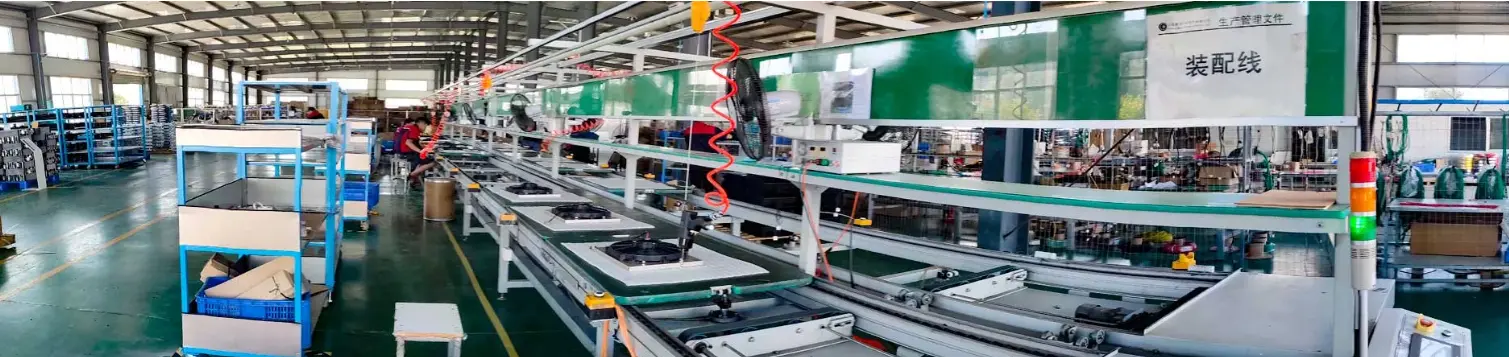
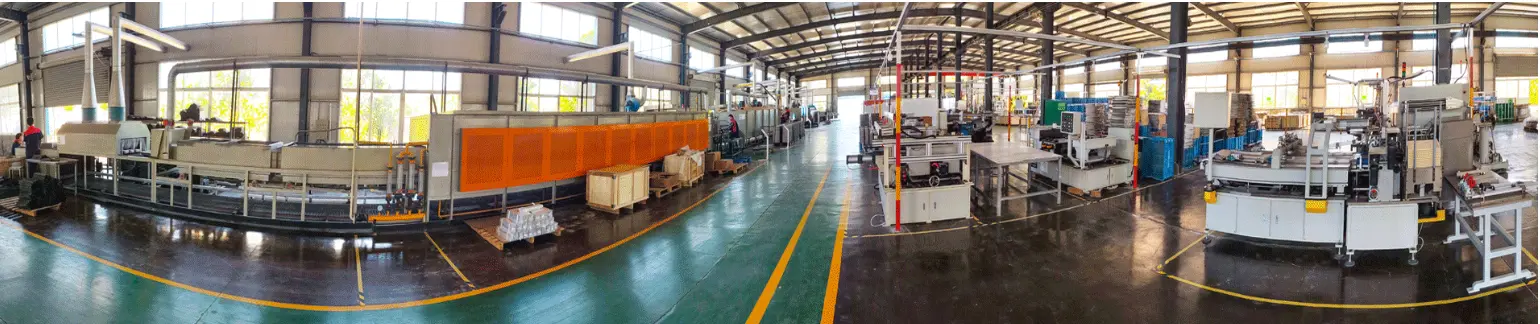
Manufacturing Snapshots (Illustrative)
Production readiness depends on consistency. The following images illustrate assembly and process contexts related to HVAC core components.

Core Advantages
A four-dimension summary of capabilities formed in this case (no public quantitative claims without verifiable sources).
Robustness
Vehicle Matching
Serviceability
Scalability
Applications & Outcomes
This type of tractor HVAC system targets typical agricultural duty cycles with an emphasis on stability and maintainability, serving OEM platforms with clear cabin comfort and reliability requirements.
For delivery, we prioritize engineering outcomes that OEM teams can validate—issue-closure speed, batch consistency, and service efficiency—rather than isolated numbers without sources.
Industry Exchange & Program Collaboration (Illustrative)
Illustrative photos for industry events and collaboration contexts. Images are included as case materials.


Upgrade Roadmap
Future improvements are organized into practical directions: comfort, robustness, serviceability, and digital collaboration.
Smarter Control & Early Warning
Enhance interpretable control strategies for stability under harsh conditions and improved serviceability.
- Refine protection and graceful-degradation strategies
- Improve traceability and diagnostic readability
Efficiency & NVH Balance
Iterate efficiency and noise experience while keeping reliability and comfort as baseline requirements.
- Optimize ducting and airflow to reduce unnecessary noise sources
- Improve matching to reduce overshoot and fluctuation
Collaboration & Standardized Delivery
Continue consolidating templates and standards to accelerate the path to validation and production readiness.
- Align requirements, validation, and production criteria
- Co-develop key quality control points with suppliers
Summary
The challenge of all-season tractor HVAC is turning uncertain duty cycles into controllable engineering inputs, then closing risks through validation before production.
This case shows how thermal management, durability, contamination resistance, and manufacturing consistency are linked into a deliverable path for OEM programs.
Sources & Patents
Sdkangbao Patent Information (Verify via public records)
Sdkangbao has filed patent portfolios around contamination-resistant heat exchange, packaging/durability, protection, and control strategies for agricultural machinery HVAC. Please verify publication numbers and legal status via CNIPA public records.
- Contamination-resistant / anti-clog heat exchanger structures
- Durable mounting and line routing for high-vibration duty cycles
- Cabin dust protection / positive pressure and service-friendly filtration
- Control strategies and diagnostic / early-warning approaches
Ready to upgrade your machinery HVAC?
Contact our engineering team for a custom solution tailored to your specific requirements.